
Finding the road home: arts therapy at the intersection
by Bianca Isaac (Drama Therapy)
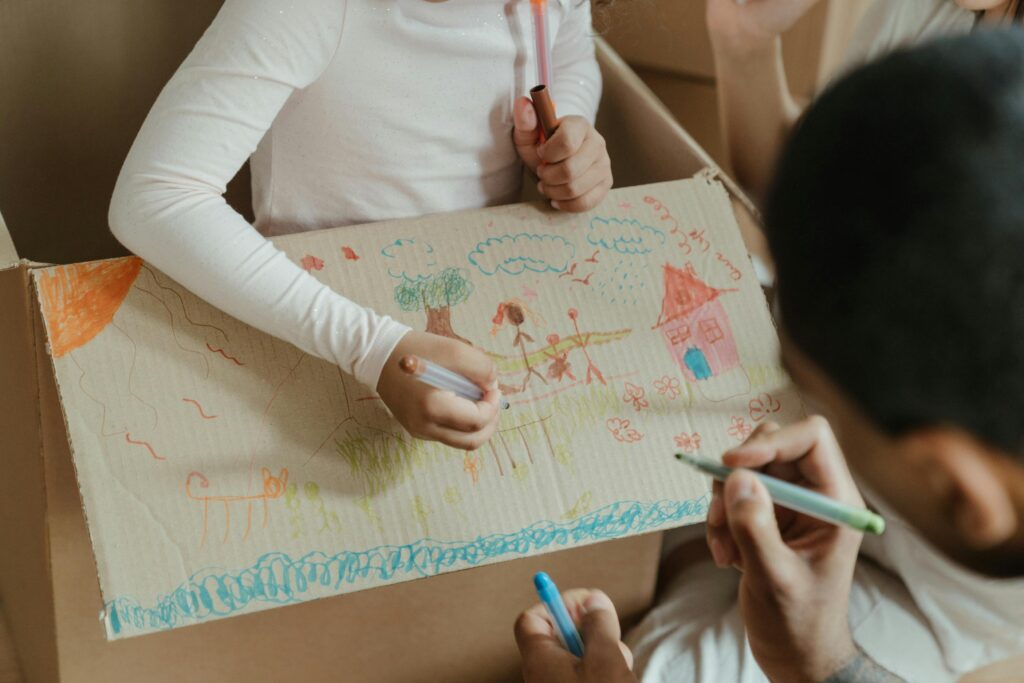
“Life takes us places, love brings us home”.
This is an anecdote my travelling mom recited every time she returned to South Africa from a work trip. I’ve come to understand that the idea of home is far from a singular idea, nor is it limited to a place of residence. The notion of home is inherent in the things that feel safe and secure. Whilst relative to our cultural idiosyncrasies, music, dance, art and drama have been a holding space throughout generations. The crucial (yet often neglected) necessity to create has the ability to heal ourselves and help others. Creativity and healing are certainly not mutually exclusive, and I wish the world had formalised them as therapy tools sooner.
This article briefly outlines my initial experience of arts therapies within a setting of a multidisciplinary team. Working in these spaces has highlighted how creative practices can provide a fundamental sense of home as they anchor clients through life’s various intersections.
A necessary intersection
The paradox of something older and more natural being the ‘new kid on the block’ is a challenging theme which creative practitioners often experience. I recall a particular internship at a reputable NGO: It was case allocations morning, and I was repeatedly skipped during the allocations process. I was the first drama therapist to enter the space and as such, my discipline and scope was largely unfamiliar.
I knew from the onset that my desire to work in a multidisciplinary team would require advocacy, over and above treating patients. Four intense years in public relations prepared me for this integral, multifaceted battle – practicing, advocating and building. The director of the institution supported every step of my journey, despite coming from a completely different mental health profession. Alliances in this field are paramount to moving forward.
Reservations and questions from the staff ensued, as it all appeared new in the face of established forms of therapy. With time, and a little wiggle out of archaic comfort zones, perceptions started to shift. It became apparent that clients need methods that allow familiar outlets, in the same way we often yearn to arrive back at a familiar home after a long day. These outlets harness flexibility, allow for laughter, imagination and critical, embodied thinking. Through these methods, clients were being understood in fewer sessions, were given more tools to express themselves and the depth of our work began to shine.
“With time, and a little wiggle out of archaic comfort zones, perceptions started to shift.”
“Clients need methods that allow familiar outlets, in the same way we often yearn to arrive back at a familiar home after a long day.”
Finding common ground
How this work is understood is slowly shifting. The shift in my journey included a necessary unpacking of what we do. Many of the activities we utilise employ projection and metaphor. These are psychological mechanisms which allow a client to see their lives through a different lens. Reality can become less harsh and problems are broken down into more manageable pieces.
Through these processes, therapists are able to understand client needs and experiences more succinctly. Ideas emerge, objective stances are taken, and cathartic release is more attainable. Many creative activities from our childhood achieved these integral goals. It was found in fixing a toy car, playing games or creating artwork.
My work was then edified by working with a team of professionals. Together we explored the concept of timing: when to introduce certain activities and when to listen. I learnt from my colleagues that the dance between scaffolding and simply providing space is a crucial, often neglected refinement. My colleagues helped me hone offerings for neurodiverse clients. Social workers educated me on the legalities of abuse. Educational psychologists provided a myriad of information which informed the way I work with children. Counselling psychologists offered a wealth of knowledge on psychoeducation and session formats.
A familiar path
Along this journey there were necessary moments of respite. One such moment occurred in 2024 when I was fortunate enough to collaborate with the Making Amends Foundation, sponsored by the National Art Council. I worked with a passionate music therapist, and our synergy was seamless. She began the session with music, and this immediately grounded us all. We used music to compliment the dramatic exercises at the end of the session and incorporated impromptu work with a guitar. This collaboration expanded our offering – it provided texture and layered meaning. It was largely evident that I had been shaped by exposure to various practitioners over time. This sense of home had adjusted: it had familiar foundations, but the structure was stronger.
This year I was asked to supervise two interns at the same NPO I conducted my internship at. The landscape had shifted, reflecting increased recognition of arts-based therapies: these interns did not have to jump through hoops of education and advocacy before receiving their case load. It has been a meaningful experience to engage with their work and their knowledge, as well as share mine. In some way we existed as a sense of home for each other in a setting which was once foreign.
After traversing through different fields, it has become apparent that clients aren’t cases, but rather human beings layered with emotion and complexity. Multidisciplinary teams are crucial to embrace this complexity. The consolidation of professional and personal ideas in a multidisciplinary team has, with time, undoubtedly been a poignant experience.
Home is where our nuances and idiosyncrasies are woven together. Our job, regardless of modality or qualification, is to collectively help clients find these and bring them home.

BIANCA ISAAC
Bianca Isaac is a Drama Therapist, after shifting careers in 2012 from public relations. Since qualifying, she has worked in schooling and NGO environments. She is a seasonal worker for the Johannesburg Parent and Child Counselling Centre whose core mission is to provide access to mental health services. She works with clients online, and has been supervising art therapy interns since 2025. As the founder of the ‘Human Storyboard’ project, she creates platforms in which people can connect and communicate about often controversial realities. Additionally, she runs a private practice, and has worked with the University of Witwatersrand and Lefika La Phodiso.