
Collaborating with Uncertainty In The Meshwork of Care
by Michael Raven (Music Therapy)

During my training as a music therapist, we were encouraged to think of communities as meshworks (Ingold, 2011) – interlinked structures of people, possibilities, and pathways – a powerful and responsive resource for those in need. This is a rethinking of the more familiar “network” which implies connection but in a more static and linear way and misses something of the complex and dynamic nature of a meshwork.
At its best, I think mental health care should function the same way. It would flow across the regulated lines of discipline and profession, adapting to meet people where they are, and recognising them as whole beings, interlinked within communities. The collective of practitioners would understand one another and their communities, and a wide variety of care would be available to those who need it most.
A recent conversation brought this idea into sharp focus for me. I had a phone call with a friend and occupational therapist, and the discussion proved illuminating. We spoke about her work in mental health, and the many ways her training and experience inform her practice. We also spoke about how often occupational therapists are professionally misunderstood-something I could relate to from my own experience as an arts therapist. I was also struck by how little I knew about her work and training.
In almost every residential or medical facility I work in-usually doing group music therapy sessions-there’s an occupational therapist, often in a management role, overseeing and delivering resident care. Though we often discuss the work I do, I’ve seldom had the opportunity to understand the full scope of their work. Through our conversation, I saw overlap in terms of professional values and the way we understand our roles. We also noted clear differences in our modalities and spoke about the different kinds of work we each find ourselves doing as private practitioners. All practitioners are different. Each of us brings a different mix of theory, training, culture, personality, and lived experience. These matter. They shape the texture of care we provide. By getting to know one another, these kinds of conversations can resource care systems. It felt like I had made a meaningful connection with a part of my local mental health ecosystem, with another avenue for referrals available to me.
“Mental health care should flow across the regulated lines of discipline and profession, adapting to meet people where they are, and recognising them as whole beings.”
“By collaborating in this communal way—by learning from and with other professionals—we strengthen the meshwork of care interwoven in our communities.”
This kind of informal, local collaboration can be fruitful on many levels. Public health thinking reminds us that individual health issues don’t just occur in isolation, but are closely linked to the health of communities. By collaborating in this communal way-by learning from and with other professionals-we strengthen the meshwork of care interwoven in our communities.
For many of us who have tried to access mental health care, this interlinked vision might be far from our actual experience. Truthfully, it is sometimes inconvenient to think of people in context, and healthcare services-or service providers-are often seen as something quite separate from our everyday sense of what makes up our ‘community’. As mental health practitioners, it’s easy to become siloed in our work, connecting with other professionals only at the point of referral. Your scope-and that of the practitioner you’re referring to or receiving a referral from-has been predetermined and is supposedly uniform regardless of the setting.
In several clinical settings, I work in tandem with occupational therapists who recognize the unique value the arts bring to the spaces they manage. I am sometimes bemused by the awed expressions and positive feedback I receive when care managers visit a music therapy session and witness those under their care coming alive, moving, singing and smiling. Invariably across settings, it is the level of expressive vitality and interpersonal connection that seems to surprise them the most. Their surprise only deepens when I offer them an instrument and invite them to participate on equal footing with the rest of the group.
For many professionals, the idea of using a medium other than words is exciting yet mysterious. The invitation to recognise themselves as an interconnected part of the therapy group may also feel unfamiliar. For me this speaks to the essential role of the arts, which goes beyond simply broadening the offerings of care, but also broadening our thinking and opening us up to possibilities we could not have conceptualized using purely intellectual, verbal processes. The arts can give us the means to embrace the unknown, in a society increasingly (and often unrealistically) averse to uncertainty.
Facilitators of Imagination
As arts therapists, the essential task of defining our professional work in this context can feel frustrating, even overwhelming, as we try to fit into a system that requires definitions in a very particular kind of language. And although arts therapists are well trained to use clinical language, we are also adept at challenging its ubiquity!
One consequence of this is that arts therapists are often placed at the edges of care systems-sometimes misunderstood, or expected to explain and re-explain their value in medical or psychological terms. I think our difficult task is to embrace this fringe more fully, to learn the clinical language thoroughly and yet, to remain critical of its function in every interaction.
After all, language does not exist within a vacuum but may serve multiple, unconscious interpersonal objectives as well as clinical ones. Arts therapists must translate the depth and openness of their creative and clinical modalities into language that is accessible to other professionals, including those who often operate in high pressure, low control medical or care environments. In these spaces, ambiguity and uncertainty can be dangerous and require constant management. The problem of course is that essential innovation and change cannot come from certainty. It is only by engaging with the unknown that we can discover hidden ideas, resources and connections as yet beyond our imagination. In today’s health systems we need professionals skilled in engaging with the unknown in a sustainable and creative way. More than ever we need professional facilitators of imagination!
What value does imagination serve in moments of crisis? What does it have to do with the treatment and management of mental health problems? For arts therapists it is indispensable. In clinical work, and also as part of professional teams, arts therapists play an essential-though often misunderstood- role of humanising care, of holding and containing uncertainty, without trying to eliminate it or diminish its vital role in our lives. I would go so far as to say that we collaborate with uncertainty, seeing it as much as a resource as a risk.
This can mean helping people explore new ways of thinking, feeling, and being where a situation feels otherwise hopeless. It isn’t simply about creativity for its own sake; it’s about powerful and transformative innovation. In my own practice, I have seen this as a reimagining of what it means to be healthy, especially when illness, trauma, or diagnoses have narrowed a person’s sense of identity or possibility. Through sound, image, movement, and story we support the construction of new meanings- optimistic, personal and empowering.
Within multidisciplinary teams, this has sometimes meant inviting fellow professionals to reflect on their own roles, habits, and assumptions. We hold space for our colleagues to reconnect with their feelings and the human side of their practice, to question their role in the health system, and to imagine alternative, more compassionate and effective ways of working. In doing so, we don’t just support those accessing care-we help bring vitality, creativity, and emotional depth back into the professional lives of those around us (Havsteen-Franklin et al., 2023).
Creative Health
Creative health is an emerging field of public health that refers to the use of arts and creativity to support people’s physical, emotional, and social wellbeing. For me, it represents the growing momentum of perspectives that humanise health systems. A vital shift in how we think about health itself- as a deeply human process of meaning-making, expression, and connection.
Although the field of creative health is distinct from arts therapy, it does highlight a shared way of thinking about health. It helps reintroduce humanity into systems that often feel impersonal or procedural. For multidisciplinary teams, arts therapists can help practitioners formulate narratives around their work that strengthen their sense of meaning and connection. They can provide tools to engage with persons beyond diagnosis-to understand their stories, cultures, and inner lives.
“Arts therapists can help practitioners formulate narratives around their work that strengthen their sense of meaning and connection.”
For people accessing care, this way of seeing health can be the difference between feeling processed and feeling seen. In many institutionalised healing spaces, where personal narratives are often set aside to make space for medical procedure, there is the risk of stripping persons of the stories they need to make meaning of their experience, which has a direct impact on how they will or will not survive their experience. It reminds us that healing happens not just through life-saving medical interventions, but in life-affirming relationships, where our stories are recognised and respected.
Conclusion
There is much that could be said about how the health system needs to recognise and incorporate the arts therapies more fully. There is also scope for arts therapists to see themselves as leaders and innovators within the care system, those with sought after expertise in creativity and wellbeing. Arts therapists are uniquely positioned to ask and answer questions like, “How do we help the team itself become more human, more creative and more interconnected?” Responding to this kind of question requires something of all of us: a willingness to stay curious. It is also an invitation to a daily practice of being generous with our imaginations, most especially in our interactions with other professionals. This kind of creativity is not separate from health – it is health.
“This kind of creativity is not separate from health—it is health.”
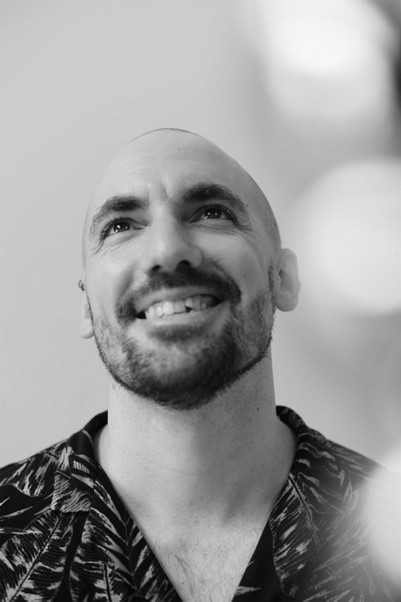
MICHAEL RAVEN
Michael Raven is a Cape Town-based guitarist and music therapist whose work explores the intersection of creativity and well-being. With a background in psychology and public health, he is drawn to the role of imagination and shared expression in shaping our personal and collective stories.
Apart from therapy work in private practice, he performs regularly with the Groundspring Playback Theatre Company, and the Barnyard Theatre Company where he serves as musical director. He has spent the past two decades making music across stages, schools, studios, and therapy rooms.
References:
Havsteen‑Franklin, D., de Knoop, J., Agtarap, T., Hackett, S. S., & Haeyen, S. (2023). Evaluation of an arts therapies approach to team development for non‑acute healthcare teams in low control and high‑pressure environments. Arts in Psychotherapy, 83, Article 102003. https://doi.org/10.1016/j.aip.2023.102003
Ingold, T. (2011). Being alive: Essays on movement, knowledge and description. Routledge.